What happens when Rust streamer servers invite a known troll like Stimpee?
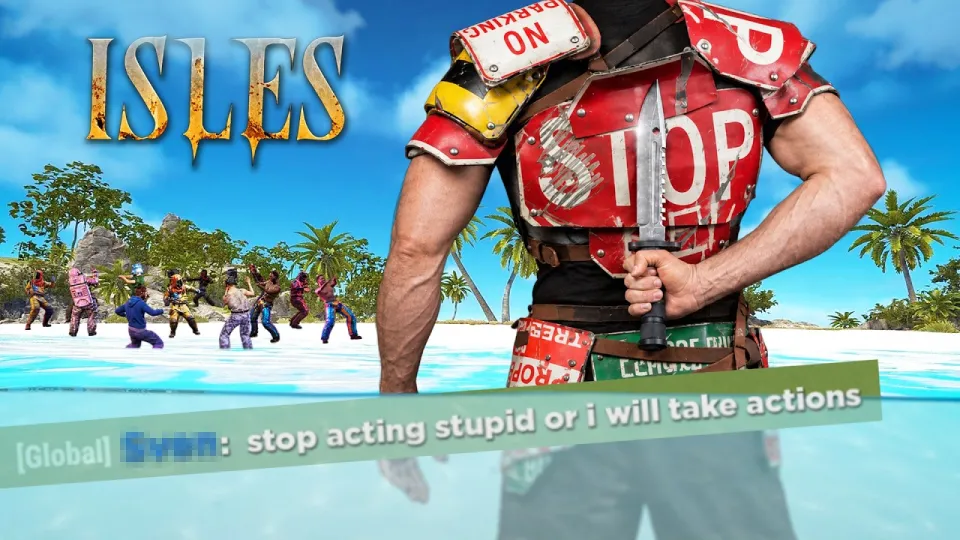
Video: Not Another Rust Streamer Server
You can order the same kind of articles for your own video to boost it on YouTube and Google. Just message the Telegram bot @sat_sit_bot. It writes articles around your video, embeds the video and publishes them on popular niche websites (no ads). Free trial — 50 articles.
· based on the channel Stimpee
Key takeaways
- Stimpee returned to a Rust streamer server for the first time in years, joining the invite-only "Rust Isles" project.
- Rust Isles is a pirate-themed roleplay server built for content creators, with admins policing loot, clans and behavior.
- Admins reportedly searched Stimpee's inventory to strip weapons of mass destruction, a detail viewers treated as his reputation preceding him.
- A clan leader recruited Stimpee without questions, then reacted badly when his boat was hijacked and the crew was left stranded.
- Streamer servers trade the usual wipe chaos for scripted alliances, which is why viewers describe them as a kids' party for adults.
A Rust streamer server is an invite-only, often roleplay-heavy Rust world where content creators play together under admin supervision, and Stimpee's return to one after years away shows exactly how that setup works in practice. In the video "Not Another Rust Streamer Server" he joins the pirate-themed Rust Isles, and the result is less a survival wipe and more a social experiment where admins, clan leaders and trolls negotiate the rules in real time. You can follow his live sessions on his Twitch channel.
What is a Rust streamer server and why does Rust Isles exist
A Rust streamer server is a private Rust instance where access is limited to streamers and their friends, usually funded or organized by a creator collective and moderated by admins who enforce roleplay and content rules. Rust Isles, the server featured in the video, leans into a pirate theme: crews, boats, alliances and a lot of talking before shooting. The trade-off is obvious. You get reliable interactions, recognizable faces and storylines that produce clips, but you lose the lawless pressure that makes public Rust so tense. That tension is exactly what Stimpee's presence reintroduces, because his default playstyle is built on betrayal, theft and improvised chaos rather than scheduled diplomacy.
How Stimpee actually plays on Rust Isles
Stimpee's approach on the server is to treat roleplay as raw material rather than a script. He joins a clan, accepts trust he has not earned, and then converts that trust into an advantage. The most discussed sequence involves a clan leader who recruits him without asking a single question, only to watch his boat get hijacked and his crew stranded on an island. From a Rust perspective that is textbook early-wipe economics: transport is expensive, loyalty is cheap, and the player who controls the boat controls the day. From a roleplay perspective it is a gift, because it creates a conflict other players can escalate. The server's response, according to viewer discussion, was to treat it as a rule problem instead of a story problem, which is where streamer servers usually crack.
Why admins watch Stimpee's inventory so closely
The admin attention around Stimpee is the clearest signal of how streamer servers are policed. Viewers noted that moderators went into his inventory to remove weapons of mass destruction, a move that reads as preemptive nerfing rather than punishment. On a normal Rust server nobody audits your boxes unless you cheat; on a curated server admins balance the entertainment value of chaos against the risk of one player ending the season in an afternoon. Stimpee's reputation does half the work here. Admins know what a Molotov, a tower and a roof camper can do to a server full of people who agreed to be friendly, so they intervene before the content becomes a wipe.
The clan drama problem in roleplay Rust
The clan drama is where the pirate theme and the rulebook collide. A server built around theft and betrayal should welcome a hijacked boat, yet the same server can punish it when the victim is a well-known streamer with a storyline to protect. That mismatch produces the scenes viewers remember: a leader melting down in chat, a crew abandoned on a beach, and an admin team deciding whether the joke was worth the fallout. Rust's own design encourages exactly this behavior. Boats are fast, cheap to steal and hard to track, and a stranded player loses hours of farming. Roleplay servers add a second layer of consequences, because reputation matters when you will meet the same twenty people tomorrow.
What viewers get wrong about streamer servers
Streamer servers feel staged even when nothing is scripted, and that perception shapes most audience reactions. The recurring complaint is that adults sound like children at a birthday party, and the recurring compliment is that Stimpee comes across as one of the more normal players in the room. Both observations point at the same thing: the social stakes are lower than on a public server, so people perform. There is no offline raid paranoia, no hacker in the lobby, no stone base getting wiped at 4 a.m. by a clan that never sleeps. What remains is conversation, alliances and the occasional act of piracy, which is closer to a VR chat lobby with guns than to solo Rust.
How to judge whether a streamer server is worth watching
A streamer server is worth watching when the players treat the rules as a puzzle instead of a fence. Three things separate a good one from a boring one:
- Admins who intervene on mechanics, not on storylines, so theft and betrayal stay legal.
- Clan leaders who accept the risk of recruiting a wildcard and then play out the consequences.
- At least one player willing to lose a boat, a base or a friendship for a better scene.
Rust Isles scores well on the third point thanks to Stimpee and less well on the second, because the same leaders who hand out invites often cannot handle the answer. For anyone deciding whether to watch, the practical test is simple: count how many conflicts get resolved in chat versus in-game. The more that happens in-game, the better the server.
Useful links
- Stimpee on Twitch — live Rust streams and streamer-server sessions.
- Stimpee on Twitter — schedule updates and clip announcements.
- Stimpee on Instagram — behind-the-scenes posts.
- Stimpee's Discord — community chat and session announcements.
Final thoughts on Rust streamer servers
Stimpee's Rust Isles episode works because it exposes the unspoken contract of every streamer server: chaos is welcome as long as it stays entertaining and does not break someone else's arc. The boat hijack, the inventory audit and the clan fallout are all symptoms of a format that wants Rust's danger without Rust's anonymity. If you enjoy watching that balance get tested, the channel Stimpee is the place to see it, and the live streams on Twitch are where the next round of negotiations happens. The format is not going away, and neither is the player who keeps forcing admins to improvise.
Source: Not Another Rust Streamer Server · Markdown version
Questions & answers
What is a Rust streamer server?
It is a private Rust server limited to streamers, creators and their friends, usually moderated by admins who enforce roleplay or content rules. These servers prioritize interactions and storylines over the standard wipe grind, which is why they often feel more like a social space than a survival game.
Why did admins remove items from Stimpee's inventory?
Viewers described moderators entering his inventory to take away weapons of mass destruction, effectively nerfing him before he could use them. On curated servers admins balance entertainment against the risk of one player ending the season quickly, and a known troll gets watched more closely than anyone else.
Was the boat theft against the rules on Rust Isles?
The pirate theme suggests theft and betrayal should be allowed, and Rust's own boat mechanics make hijacking easy and profitable. The conflict came from how the clan leader reacted, treating a legitimate in-game move as a personal betrayal rather than playing out the consequence.
Is a streamer server easier than normal Rust?
It is safer in some ways, since there is no offline raid paranoia or random hacker in the lobby, but the social pressure replaces it. Reputation matters when you meet the same small group every day, so mistakes cost standing instead of just loot.